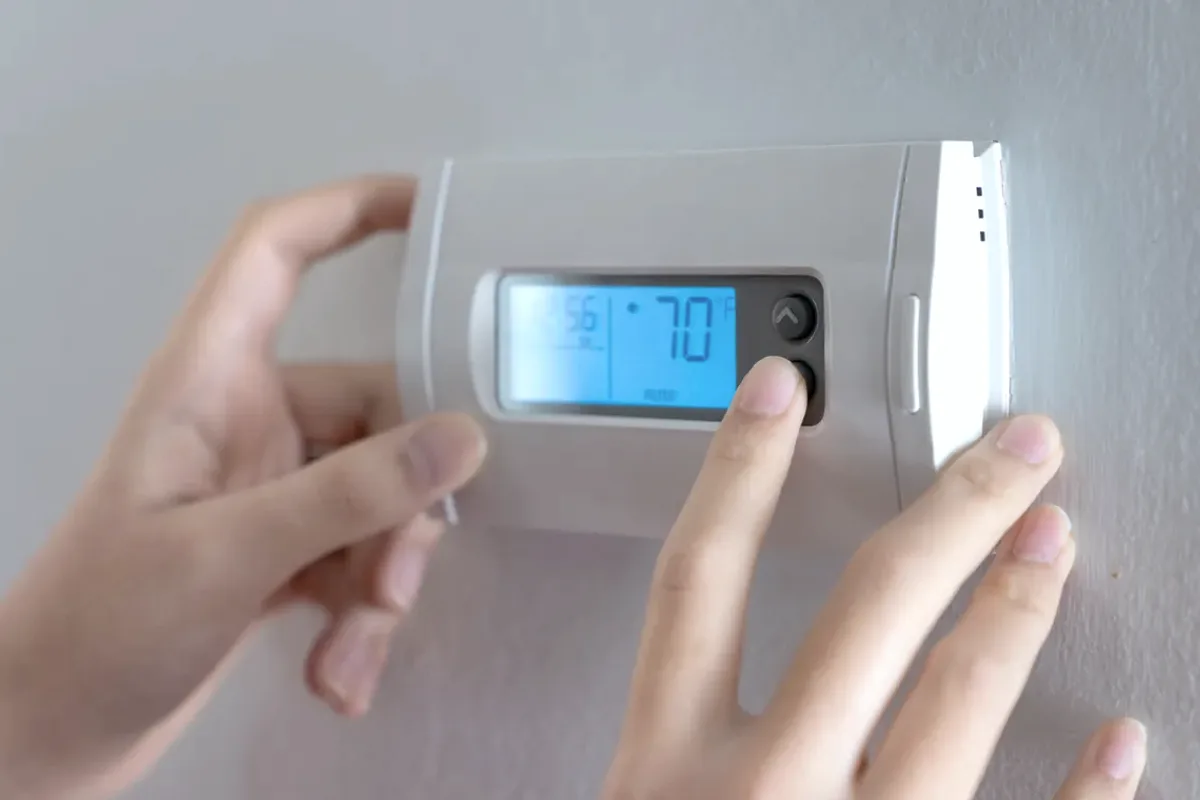
Request thermostat repair & replacement for a property in Nanticoke. Include the equipment, the problem or planned work, and your location so the request can be reviewed.
How can you determine whether a thermostat needs repair or a compatible replacement?
A blank display, inaccurate temperature reading, or heating and cooling equipment that starts and stops unexpectedly may involve the thermostat, its placement, wiring, or the controlled system. Diagnosis compares the displayed reading with the room conditions and observes how the equipment responds to a call for heating or cooling. Replacing a thermostat also requires checking compatibility with the furnace, heat pump, and any staged or humidity-control functions. A control upgrade should be selected for the equipment it will actually operate.
Assessment considers display operation, temperature readings, control signals, wiring, and the HVAC equipment's response. A thermostat exposed to direct sun, a cold window, or supply airflow may read unrepresentative room conditions. Replacement planning checks existing system type and control requirements, including staging or heat-pump functions. These details distinguish a faulty control from a placement or compatibility problem.
Blank displays, inaccurate readings, wiring faults, and short cycling.
Thermostat placement near sunlight, windows, or supply vents.
Compatibility with staged furnaces, heat pumps, and dehumidification controls.
Assessment and Scope
Questions for the Proposed Work
01
Separate a control fault from a system fault
A blank display, incorrect reading, or frequent starts and stops can originate in the thermostat, its wiring, or the equipment responding to its signal. Testing should compare the control's operation with the heating or cooling system's sequence rather than assume the thermostat is responsible. Internal electrical checks and wiring repairs are not occupant tasks. Findings help establish whether a repair to the existing control is appropriate or whether the problem lies elsewhere in the HVAC system.
02
Consider placement when readings seem wrong
A thermostat near direct sunlight, a cold window, or a supply vent may sense conditions that differ from the room as a whole. Comparing the reading with conditions at the control's location can reveal whether placement is contributing to uneven operation. Relocation or another corrective approach depends on the wiring route and the building layout. Addressing the source of a misleading reading matters because replacing the thermostat alone may not correct an unsuitable location.
03
Check compatibility before upgrading
A programmable or smart replacement must support the functions of the connected equipment. Multi-stage furnaces, heat pump staging, and dehumidification controls can require different wiring and control capabilities from a basic thermostat. The existing wiring and HVAC model should therefore be compared with the replacement's requirements before selection. Repair may be preferable when the current thermostat is compatible and has an isolated fault; replacement is a distinct choice when condition or functionality warrants it.
Compare the next step
Have the owner test normal local scheduling and remote permissions before departure. Ask what happens if internet service or device batteries fail and who receives useful notifications. Document the equipment-compatible settings and access arrangement so another authorized person can respond without guessing at the control configuration.
Thermostat wiring is not universal. Do not connect wires by colour alone or work on energized wiring; a compatible control must be configured for the equipment it serves.