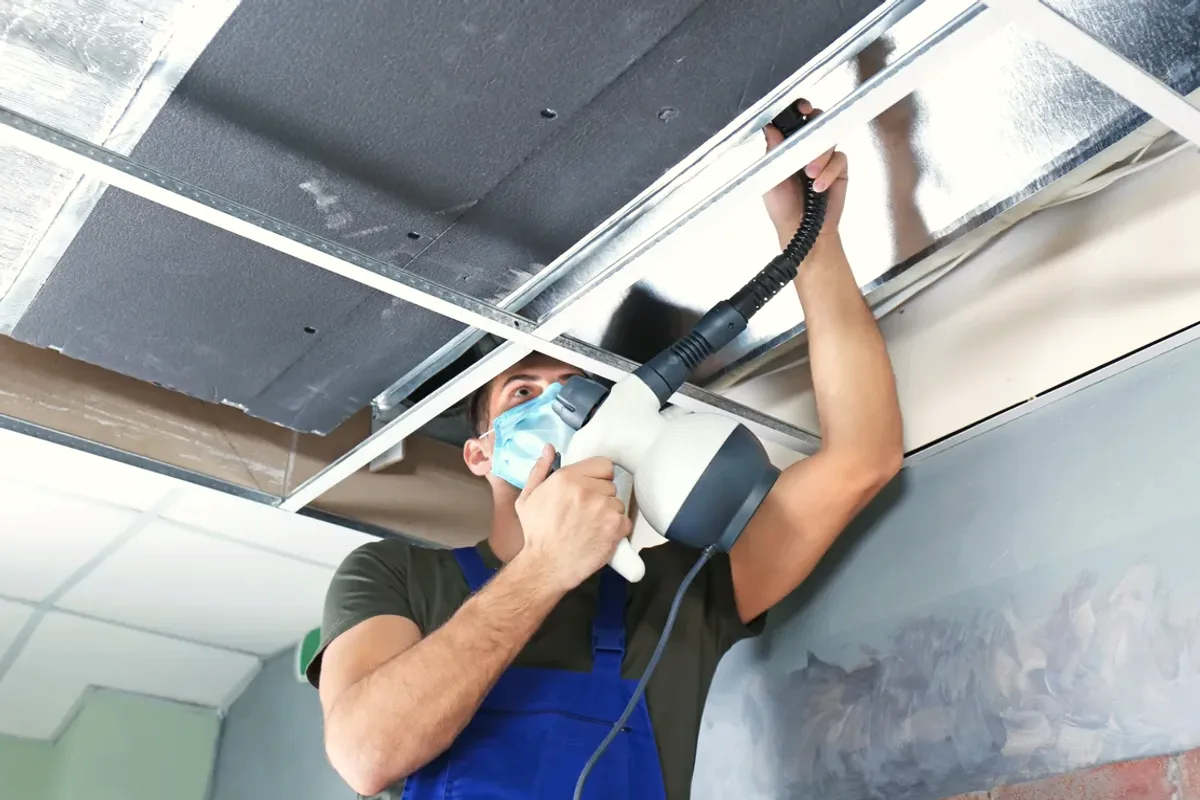
Request duct cleaning for a property in Nanticoke. Include the equipment, the problem or planned work, and your location so the request can be reviewed.
What findings indicate that duct cleaning, rather than another airflow repair, may be needed?
Duct cleaning is most useful to consider when inspection identifies a specific concern, such as visible debris, renovation residue, or a suspected blockage in accessible ductwork. Weak airflow at one register does not by itself prove that the ducts need cleaning; a closed damper, crushed section, or other distribution fault may be responsible. A review of the affected run helps distinguish removable debris from duct damage or leakage. Cleaning scope should reflect inspection findings rather than a routine timetable or claims about health or system performance.
Assessment identifies which registers or rooms have weak airflow and inspects the relevant supply or return paths where accessible. Evidence of debris is considered separately from a crushed duct, closed damper, or leaking joint, since these require different work. Inspection results help define whether cleaning, duct repair, or further HVAC diagnosis is appropriate. Cleaning should be based on the condition found, not scheduled automatically.
Inspection and cleaning of supply and return duct interiors when indicated.
Airflow restrictions caused by debris, closed dampers, or crushed duct sections.
Accessible duct leakage and damaged-section repair as distinct from cleaning.
Assessment and Scope
Questions for the Proposed Work
01
Inspect before defining cleaning work
Visible debris or residue in an accessible duct may support cleaning, but dust at a grille alone does not establish the condition of the full duct system. The inspection should identify which supply or return sections are affected and what can be accessed. This matters because a defined scope can focus work on the observed concern rather than presume every run needs the same service. Manufacturer guidance and inspection findings should inform any related equipment maintenance.
02
Trace weak airflow to the actual restriction
If one register has little airflow, the affected branch can be compared with other outlets and inspected for a closed damper, crushed section, or debris. A restriction may require duct repair or adjustment rather than cleaning, while a broader airflow complaint may involve equipment or system conditions outside the ducts. Pressure observations or inspection tools can help locate the problem. Identifying its cause first avoids treating cleaning as a solution to every airflow concern.
03
Treat leaks and damaged ducts as separate work
A leaking duct joint can lose conditioned air or draw dust from an adjacent space, while a damaged or crushed section can restrict flow. These are repair concerns distinct from removing debris from duct interiors. Inspection should identify the location and condition of accessible connections before any sealing or duct replacement is considered. The work scope should state whether it involves cleaning, repair, or both, and should be based on observed conditions rather than assumed system-wide defects.
Compare the next step
If documented contamination warrants cleaning during an absence, agree on authorized entry and protection of belongings. Ask how the provider will record access openings, affected components, and completion. Arrange who reviews any unexpected moisture or damaged material findings before work expands beyond the accepted scope.
Routine cleaning is not automatically necessary and does not guarantee health or energy benefits. Resolve moisture sources and assess damaged materials rather than treating cleaning as the only remedy.